Comfort, bedding, and adjustable sleep
Wool Layers and Elevated Sleep: Managing Warmth as Your Position Changes
A bed that changes angle changes more than posture. It changes the quiet geography of blankets: where they settle, where they pull taut, and where a little pocket of warmth gathers. Wool can help make those shifts more comfortable, provided the layers are chosen and arranged with the moving surface in mind.
Published November 15, 2026
An adjustable bed is often introduced as a mechanism: motors, hinges, a remote, a head section rising by degrees. Yet the experience of using one is also tactile and domestic. A familiar blanket may slide toward the foot of the mattress when the head lifts. A duvet may bunch at the waist. A light layer that felt perfectly sufficient while lying flat may suddenly leave the shoulders exposed—or trap too much warmth beneath the knees.
These changes are ordinary consequences of moving a flexible sleeping surface. They are also a reminder that comfort depends on the whole arrangement: mattress, bedding, clothing, room temperature, and the position a person actually keeps. Wool layers can be useful in that arrangement because wool can insulate while allowing moisture vapor to move through its structure. But wool is not a thermostat, and its performance does not make bedding automatically suitable for every sleeper or every angle.
The practical aim is not to build the warmest possible bed. It is to create a breathable, manageable layer system that stays in place as the bed moves, feels comfortable against the body, and can be cared for according to its materials. A few small tests—made while the bed is flat and again in the positions used most often—can reveal more than a label promising all-season comfort.
Why a change in angle changes the bedding
On a flat mattress, blankets tend to lie in a familiar plane. Raise the head or foot, and gravity begins to exert itself differently. A top layer may drift down the incline, tugging at a tucked edge. Fabric may crease where the mattress bends. If the head and foot are both elevated, the body rests in a shallow valley, and loose bedding can gather around the waist or legs.
The amount of movement depends on the bed, the mattress, the incline, the fabric, and how the bedding is fitted. A tightly secured sheet can stay put while a loose duvet shifts over it. A thick comforter may resist folding smoothly at a hinge; a thin blanket may follow the contour more easily but provide less insulation. The sleeper’s movements matter, too. Turning, sitting up, or changing the head elevation during the night can rearrange a layer that had seemed settled at bedtime.
This is why it helps to assess bedding in use rather than only by touch in a store or by its appearance on a made bed. Move the base through the range of positions likely to be used. Notice whether the covering pulls at the shoulders, slides toward the feet, or forms folds under the knees. These observations are not merely about neatness. Persistent bunching can be uncomfortable, and a loose layer that trails or catches may be a practical concern for someone who has limited mobility.
What wool contributes to sleep temperature
Wool is valued in bedding for its ability to provide insulation without relying only on dense, heavy construction. The fibers and the spaces within a wool layer help hold still air, which contributes to warmth. At the same time, wool can take up and release moisture vapor. In ordinary terms, it can help moderate the feel of a layer as conditions change, though it cannot guarantee that a sleeper will stay cool or dry.
That distinction matters. Sleep temperature is influenced by many things: the room, the mattress and protector, nightwear, the person’s own heat regulation, bedding weight, and any health or medication-related factors. A wool layer may feel comfortably temperate to one person and too warm to another. The best guide is how the complete setup feels over several nights, not a broad claim that any material suits everybody.
Wool also differs by form. A quilted wool batting layer is integrated into a cover or mattress casing. A wool-filled comforter is a more substantial top layer. A wool blanket may be used over or under other bedding. Each has a different weight, drape, and care routine. On an adjustable bed, drape deserves particular attention: a layer that is comfortable on a flat surface may be cumbersome where the mattress articulates.
If wool is new to the bed, start with one layer rather than changing every component at once. This makes it easier to tell whether the difference comes from the wool, the amount of bedding, or the way the bed is positioned. If warmth builds during the night, try removing or thinning a layer before assuming that a different material is necessary.
Choosing a wool layer for an adjustable bed
A useful wool layer begins with a straightforward question: what job should it do? A lightweight blanket may add modest warmth and be easy to reposition. A comforter can provide more coverage, but its fill and construction may make it heavier or more likely to collect at a bend. Wool batting inside a mattress cover can influence the sleep surface without behaving like a loose blanket, though it will not solve shifting in the top layers.
Consider these points before adding or replacing a layer:
- Weight and drape: Choose a layer that follows the mattress’s movement without feeling cumbersome. A very heavy covering may pull more noticeably when the head or foot section is raised.
- Dimensions: Check that the layer covers the bed adequately in both flat and inclined positions. Extra width or length can offer coverage, but excessive fabric may bunch at the sides or foot.
- Construction: Quilting, baffles, stitching, and the distribution of fill affect how evenly a layer lies. Notice whether the construction allows it to bend without forming a hard ridge.
- Surface feel: The outer fabric is what meets the sleeper or the next layer. If a wool item feels scratchy or too textured, a washable cotton cover or sheet may provide a more comfortable barrier.
- Care requirements: Read the actual care label. Some wool bedding may be washable under specific conditions; other items may require spot cleaning or professional care. Avoid assuming that all wool can be treated alike.
- Individual sensitivities: Consider allergies, skin sensitivity, and personal preference. A material described as natural or breathable is not automatically comfortable for every person.
A product’s fiber content is only part of the picture. The finished object—the weave, quilting, casing, and size—determines how it behaves on a bed that moves. If a layer will sit beneath a fitted sheet, confirm that the sheet still fits securely over the combined depth and does not loosen when the base changes position.
Arrange layers so they move with the bed
A well-arranged bed does not have to be tightly tucked into immobility. In fact, bedding that is pulled too taut may resist articulation or create pressure where the mattress bends. The goal is a secure foundation with enough ease for the fabric to follow the bed’s movement.
- Secure the fitted sheet first. Check that its corners remain anchored when the head and foot sections rise. If the sheet shifts or pulls free, verify that it is designed for the mattress depth and that the mattress itself is compatible with the base.
- Keep the top layer simple at first. Test one blanket or comforter before adding several loose layers. A simpler arrangement makes it easier to identify where slipping or bunching begins.
- Raise the bed gradually. Move through the positions used for reading, resting, or sleep. Watch the bedding at the shoulders, waist, knees, and feet rather than judging the bed only from its appearance.
- Leave room for movement. Avoid pulling a top layer so tightly that it restricts the bed’s articulation or the sleeper’s comfortable movement. Smooth it gently after changing positions.
- Recheck after settling. A layer can look well placed immediately after adjustment and shift once someone gets in or turns. Make a quick comfort check after the bed has been in its usual position for a few minutes.
If a duvet repeatedly migrates, a lighter layer, a different size, or a more suitable cover may be more effective than adding more tuck. Some people prefer separate blankets so each sleeper can adjust warmth independently. Others find a single, less bulky layer easier to manage. The right solution is the one that remains comfortable and controllable in the positions actually used.
Warmth is not the same as comfort
It is tempting to treat warmth as a single setting: more layers for cold, fewer for hot. In practice, comfort can be affected by moisture, pressure, airflow, and how much fabric rests against the body. A thick bed may feel cozy at first and then become oppressive. A thin layer may prevent overheating but leave the shoulders exposed when the upper body is elevated.
Think in terms of adaptable layers rather than one all-purpose covering. A breathable sheet, a moderate insulating layer, and a lighter blanket within reach can make adjustment easier. If a person often changes the bed angle overnight, layers that are easy to pull back and reposition may be more useful than a single heavy covering.
For a shared bed, the problem may not have a shared answer. One person may prefer wool’s insulating feel while another sleeps warm. Separate covers, if practical, allow each person to manage bedding without disturbing the other. When temperature changes are persistent, sudden, or accompanied by other symptoms, bedding may not be the whole explanation; discussing concerns with a healthcare professional can be appropriate.
Mattress and base compatibility matter
Bedding cannot compensate for a mattress or bed base that is not intended to articulate together. Before changing layers, confirm that the mattress is approved for the adjustable base and that the base is being operated according to its instructions. A mattress that bends poorly may create folds or pressure points that no blanket arrangement can fix.
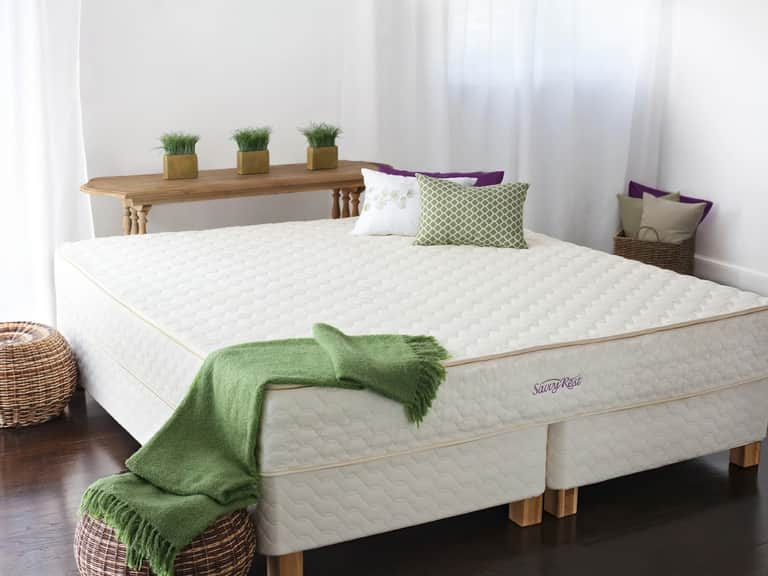
Some mattresses incorporate wool into their construction as batting or as part of the cover. For example, the Savvy Rest Serenity Latex Mattress is described as having organic wool batting quilted into its organic cotton casing and as being compatible with an adjustable bed base. That information may be useful when considering how materials are incorporated into a sleep surface. It does not determine whether a particular sleeper will find the mattress warm, nor does it replace checking the product’s current specifications, setup instructions, and care guidance.
If an existing bed is being adapted, check the base manufacturer’s limits, the mattress instructions, and any restrictions on mattress protectors or fitted sheets. The combined thickness of a mattress, topper, and bedding can affect fit and movement. When uncertain, ask the relevant manufacturer or supplier rather than testing an unsupported arrangement by trial and error.
Care that preserves wool’s texture and performance
Wool bedding is not a single care category. A washable cover, a wool blanket, a comforter, and a mattress casing may each require different treatment. Follow the item’s label and the maker’s instructions, even when general advice elsewhere suggests a different method. Incorrect washing, excessive heat, or aggressive drying can change the texture, shape, or fill distribution.
Routine care can be simple. Use a removable cover where appropriate, air bedding when the instructions allow, and address small spills promptly using the recommended method. Avoid storing wool while damp. If an item needs specialist cleaning, use a service familiar with its construction and care requirements. For a mattress with wool inside a non-washable casing, do not assume that the entire mattress can be laundered.
It can also help to inspect bedding occasionally for shifted fill, loose stitching, worn elastic, or persistent creases. On an adjustable bed, seams and edges may experience repeated movement at the articulation points. Early attention to a loose thread or poorly fitting sheet is easier than waiting until a layer has become difficult to keep in place.
A short bedroom check for caregivers and sleepers
For anyone who uses an adjustable bed with assistance, bedding should be assessed as part of the ordinary bedroom setup. A few practical checks can make changes in position less disruptive:
- Confirm that the remote, call device, and personal essentials remain reachable after the bed is raised.
- Check that sheets and blankets are not caught in the moving parts or hanging where they could interfere with the base.
- Make sure the sleeper can move the top layer aside without strain, or that a caregiver can do so safely.
- Look for folds beneath the body that may cause discomfort, especially after a position change.
- Follow any care plan or professional guidance for positioning, transfers, skin care, and use of bed rails or other equipment.
These checks are general comfort and setup suggestions, not medical instructions. People with reduced sensation, limited mobility, a history of falls, or other specific care needs may require individualized advice from a clinician, occupational therapist, or other qualified professional. A material’s reputation for breathability does not substitute for a personalized assessment.
A practical way to find the right arrangement
Changing bedding all at once makes it hard to know what helped. A more revealing approach is to make one adjustment at a time over several nights. Begin with the current setup and note when warmth, dampness, slipping, or bunching occurs. Then adjust one variable: remove a layer, change its position, use a lighter cover, or alter the bed angle within the range recommended for the base and the sleeper’s needs.
Try the arrangement in both the flat position and the positions used regularly. Notice whether the sleeper feels covered at the shoulders and feet, whether the wool layer stays evenly distributed, and whether the bedding can be moved without difficulty. The aim is not to produce a perfect hotel-bed outline at every angle. It is to find a calm, repeatable setup that remains comfortable as the bed changes shape.
Wool can be one useful part of that setup. Its combination of insulation and moisture-vapor handling may suit sleepers who want warmth without an especially dense layer, but the specific item and the rest of the bed matter. Fit, drape, construction, care, and individual preference complete the picture.
The quiet test of a comfortable bed
The best bedding arrangement often announces itself by becoming unremarkable. The blanket stays where it is put. The sleeper does not wake to tug it back into place. A change in incline does not create a fold that demands attention. Wool’s natural properties can contribute to that ease, but thoughtful layering and regular checks do the less glamorous work.
Treat warmth as something to balance, not maximize. Let the bedding move with the adjustable bed, give the material room to perform, and follow the care instructions that belong to the specific item. With those habits, position changes can remain just that—a change in posture, rather than a nightly negotiation with the covers.